
If you are reading this the day your veterinarian said the word “lymphoma,” here is some good news: this is one of the most treatable cancers a dog can get. Most dogs who receive chemotherapy go into remission. Most of them feel well while they do.
It is also, in nearly every case, not curable. Both of those things are true at once, and holding them together is most of what the next few weeks will ask of you.
This guide explains what lymphoma is, how it behaves, what treatment can and cannot do, and what the survival numbers actually mean. It is written to be read the day of a diagnosis, when nothing else is going in.
This article is general education, not veterinary advice. Only your veterinarian, working from your dog’s bloodwork, biopsy, and stage, can tell you what is true for your dog. Nothing here should delay a conversation with them.
If Your Dog Was Just Diagnosed, Start Here
- It is treatable. With combination chemotherapy, more than 90 percent of dogs with the common form achieve complete remission, meaning the disease becomes undetectable.
- It is not usually curable. Remission is not a cure. In almost all dogs, the lymphoma eventually returns.
- Dogs handle chemotherapy far better than people do. Doses are lower. Most dogs do not lose their fur, and most do not get sick.
- You have some time to decide, but not unlimited time. Untreated, high-grade lymphoma moves fast. Days matter more than weeks.
- It is not contagious, and it is not your fault. You did not cause this, and you cannot catch it.
If you read nothing else, read that list again. Almost everything owners are afraid of in the first hour turns out to be either untrue or manageable.

What Lymphoma Actually Is
Lymphoma is a cancer of lymphocytes, a type of white blood cell that patrols the body looking for infection. Lymphocytes live in the lymph nodes, the spleen, the bone marrow, and the lining of the gut, and they travel through the bloodstream and the lymphatic system.
That is why lymphoma behaves differently from most cancers. There is no single tumor to remove. The abnormal cells are already distributed through a system that reaches the whole body, which is why surgery is rarely the answer and why a drug that travels in the blood usually is.
It is also why the disease is so often described in terms of lymph nodes. When veterinary references describe the classic presentation, it is a dog who seems entirely healthy, with lymph nodes that have swollen to three to ten times their normal size, and that do not hurt.
You may also see the older term lymphosarcoma. It means the same thing.
The Four Forms
Lymphoma is classified by where in the body it appears, and the four forms behave quite differently.
The overwhelming majority of cases, roughly 80 to 85 percent, are multicentric, meaning the lymph nodes throughout the body are involved. This is the form most of this guide describes, and the one most of the survival data applies to. The others are less common and are covered in detail in our guide to lymphoma types.
How Common Is Lymphoma in Dogs?
It is the most common blood cancer dogs get. A review of the veterinary literature puts the annual incidence somewhere between 13 and 114 cases per 100,000 dogs, a wide range because the different studies counted differently. Estimates of lymphoma’s share of all canine cancers generally run between about 7 and 24 percent.
Age is the strongest pattern. The same literature reports incidence climbing from roughly 1.5 cases per 100,000 dogs under a year old to about 84 per 100,000 in dogs over ten. Most dogs diagnosed are middle-aged or older. Young dogs can get it, but it is uncommon.
Is It Contagious? Is It Hereditary?
Contagious: no
Canine lymphoma cannot spread from your dog to you, to your children, to your other dogs, or to your cats. It is not caused by a virus or a bacterium. There is nothing to disinfect and nothing to quarantine. Your dog does not need to be separated from anyone.
Transmissible cancers do exist in dogs, but they are a specific and unrelated disease, not lymphoma. And in cats, some lymphoma is linked to feline leukemia virus, which is why owners sometimes assume the same must be true in dogs. It is not.
Hereditary: complicated
Lymphoma is not passed from parent to puppy the way coat color is. But certain breeds develop it far more often than others, which VCA Animal Hospitals notes suggests a genetic component. Golden retrievers, boxers, bullmastiffs, basset hounds, and Scottish terriers all appear repeatedly in the literature.
Breed also shapes which kind. Research using breed differences has found boxers dramatically overrepresented for T-cell disease, while cocker spaniels tend toward B-cell. Golden retrievers develop both. A widely cited 1998 breed club health survey put the lifetime lymphoma risk in golden retrievers at roughly one in eight, a figure worth treating as an older estimate rather than a current measurement.
What causes any individual dog’s lymphoma is, honestly, unknown. Genetics and environment both appear to matter. Nothing you did or failed to do explains it.
The First Sign Most Owners Notice
A lump. Usually under the jaw, sometimes in front of the shoulders or behind the knees, and almost always on both sides. It is firm, it moves a little under the skin, and, crucially, it does not seem to bother the dog at all.
That painlessness is the cruel part. Dogs with early multicentric lymphoma often act completely normal. They eat, they play, they greet you at the door. Many owners find the nodes while scratching their dog’s neck and assume it is nothing because the dog is so obviously fine.
Later signs, when they come, are less specific: lethargy, appetite loss, weight loss, increased thirst and urination, and swelling of the face or legs. A dog showing these signs is described as substage b, and that carries a worse outlook than a dog who feels well, substage a.
How It Is Diagnosed
The first step is usually a fine needle aspirate: a small needle into a swollen node, no anesthesia, results often within a day or two. That is frequently enough to say lymphoma.
What it does not tell you is which kind, and that matters enormously. Additional testing, most importantly immunophenotyping, determines whether the disease is B-cell or T-cell. Bloodwork, a chest X-ray, an abdominal ultrasound, and sometimes a bone marrow sample establish the stage.
| Ask for immunophenotyping before treatment starts
Whether a lymphoma is B-cell or T-cell changes the expected outcome by roughly half, and it can change the treatment plan. Veterinary oncologists consider establishing this before beginning chemotherapy essential. If nobody has mentioned it, ask. |
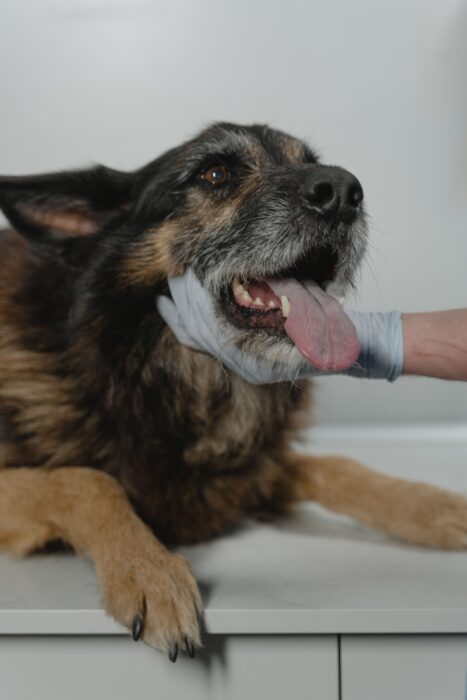
Can Lymphoma Be Treated?
Yes, and this is where the news is better than most owners expect.
The standard of care is a multidrug protocol called CHOP, given over roughly four to six months. According to the Merck Veterinary Manual, more than 90 percent of dogs treated this way achieve complete remission. Published survival figures generally give a median of about 12 months for B-cell disease and 6 to 9 months for T-cell disease.
Prednisone alone, a steroid, is the least expensive option, and it does help dogs feel better. It is a genuinely reasonable choice for some families. But it should be chosen with clear eyes.
A prospective trial of 109 dogs treated with prednisone alone, published in JAVMA in 2021, found a median overall survival of 50 days. Many websites quote two to three months. The trial data are more sobering than that, and worth knowing before deciding.
Untreated, median survival for high-grade lymphoma is generally reported at about four to eight weeks from diagnosis.
What chemotherapy is actually like for a dog
Nothing like it is for a human. Veterinary oncologists dose for quality of life rather than cure, so the doses are lower. North Carolina State’s veterinary hospital puts the risk of mild side effects, the kind managed at home with medication, at under 25 percent, and the risk of side effects severe enough to need veterinary care at under 5 percent.
Most dogs do not lose their coat, though some breeds thin out. Most dogs, on most days, act like themselves. This surprises owners more than any other fact about the disease.
What the Survival Numbers Really Mean
A median of twelve months does not mean your dog has twelve months.
It means that if you lined up a hundred dogs with B-cell lymphoma on CHOP, half would still be alive at twelve months and half would not. Some of those dogs live two years. Some live four months. The median is the middle of a wide spread, and your dog is one animal, not a distribution.
What shifts the odds is knowable: immunophenotype (B-cell does better than T-cell), stage and substage, whether the dog feels well at diagnosis, and whether the disease responds in the first weeks. Your veterinarian can place your dog within that range far better than any article can.
Questions Worth Asking Your Veterinarian
- Is this B-cell or T-cell, and how will that change the plan?
- What stage and substage is my dog, and does she feel well?
- What would you do if this were your dog, and why?
- Should we see a veterinary oncologist, and what would that add?
- What does the full course cost, including bloodwork and rechecks?
- What will you watch for, and what should I watch for at home?
- If we choose not to treat, what does good supportive care look like?
That last question deserves saying out loud. Declining chemotherapy is not abandoning your dog, and a veterinarian who is worth your trust will help you do it well.
Frequently Asked Questions
My dog has lymphoma. What can I expect?
Most likely a fast diagnosis, a decision about chemotherapy within days, and, if you treat, a dog who feels largely normal for months. With CHOP, more than 90 percent of dogs reach remission. Median survival is about 12 months for B-cell disease and 6 to 9 for T-cell. Without treatment, median survival is roughly four to eight weeks.
Is lymphoma in dogs contagious?
No. It cannot pass to people, to other dogs, or to cats. It is not caused by an infection, and your dog does not need to be isolated.
Is lymphoma hereditary in dogs?
Not directly inherited, but strongly breed-associated, which points to a genetic component. Golden retrievers, boxers, bullmastiffs, basset hounds, and Scottish terriers are all overrepresented. The specific cause in any individual dog is unknown.
How do dogs get lymphoma?
Nobody knows. Genetics and environmental exposures are both suspected, and research is ongoing. There is no established action an owner takes or avoids that causes it.
How common is lymphoma in dogs?
It is the most common canine blood cancer. Reported incidence runs from about 13 to 114 cases per 100,000 dogs per year, and it rises steeply with age.
Is lymphoma painful for dogs?
The swollen lymph nodes themselves are typically not painful, which is why the disease is so often missed early. Discomfort later depends on which organs are involved, and it can be managed. Tell your vet if your dog seems uncomfortable.
Sources
The information in this article was drawn from the following veterinary sources. Each link goes to the original publication.
Merck Veterinary Manual: Malignant Lymphoma in Dogs. Forms of lymphoma, node enlargement, remission rates, and survival with chemotherapy.
Merck Veterinary Manual: Lymphoma in Dogs, professional edition. Median survival by immunophenotype and protocol comparisons.
VCA Animal Hospitals: Lymphoma in Dogs. Types of lymphoma and breed predisposition.
NC State Veterinary Hospital: Canine Lymphoma. Chemotherapy tolerance and side effect rates.
JAVMA (2021): Canine Lymphoma Steroid Only trial. Prospective survival data for dogs treated with prednisone alone.
Veterinary Quarterly: Canine lymphoma, a review. Incidence, age distribution, and epidemiology.
The Bottom Line

Lymphoma is the cancer that responds best to treatment, and it is the cancer that usually comes back. Chemotherapy buys most dogs months of feeling like themselves, and it buys some dogs a great deal more than that. Prednisone alone buys considerably less than the internet suggests. Doing nothing is a real option, and it is a short one.
None of those sentences tells you what to do. Your dog’s immunophenotype, stage, age, and the way she looks at you across the kitchen floor tonight all belong in that decision, and only some of them are in the literature.
Ask your veterinarian what they would do. Ask about a referral to a veterinary oncologist. Then take the time you have, which is probably a little more than it feels like right now, and decide the way you would want someone to decide for you.
About This Article
Published by Tucson Vetcalls, Dr. Maria Miller’s in-home veterinary practice serving Tucson and Southern Arizona. Dr. Miller has provided end-of-life care in families’ homes since 2000.
This practice does not diagnose or treat cancer. Decisions about chemotherapy, referral, and prognosis belong with your primary veterinarian or a board-certified veterinary oncologist, and we would encourage you to start there. We publish this guide because owners deserve clear information at the moment it is hardest to find, whatever they decide to do with it.